
There is a good chance your website is not showing up where your next customer is searching.
Not because your SEO is poor or your content is bad. It is probably because the way people find answers online has shifted, and most South African business websites haven’t caught up.
In 2026, a lot of searches happen inside AI tools. Google’s AI Overviews answer questions before users click anything (you have probably seen the AI suggested answer when you search Google now). ChatGPT cites websites as sources. Perplexity pulls quotes directly from business pages. Gemini summarises your services before anyone goes to your site.
If your site is not structured for this, you are invisible to a fast-growing segment of your potential customers. Here is what has changed and how to fix it.
What Is AI Search and Why Does It Matter for SA Businesses?
AI search refers to any search experience where an AI model (rather than a list of blue links) answers the user’s query. This includes:
Google AI Overviews – AI-generated summaries now appearing at the top of SA Google results
ChatGPT search – integrated web browsing with source citations
Perplexity – increasingly popular with professionals and researchers
Gemini – Google’s AI assistant, deeply integrated with Search
According to WordStream’s 2026 AI Marketing Trends report1, pages appearing in AI Overviews see a 20–82% higher click-through rate than standard organic results. This is a massive opportunity if your site is optimised.
The critical distinction: AI search does not rank websites the way traditional search does. It reads websites and decides whether they are credible, clear, and quotable. If your site fails that test, it is simply skipped.
Why Most South African Websites Fail AI Search
After auditing dozens of SA business websites, the same problems surface repeatedly:
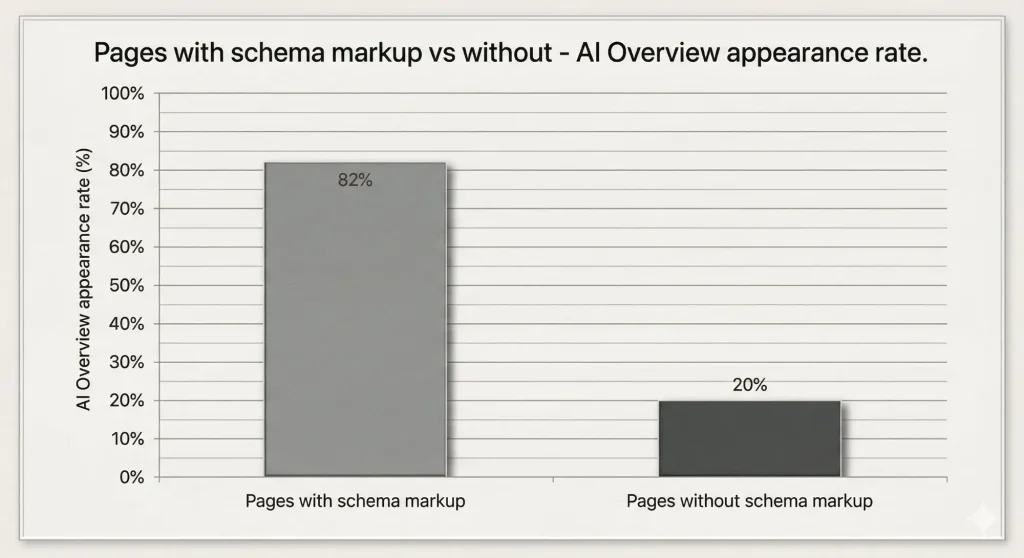
1. No structured data (schema markup)
AI models rely heavily on schema markup to understand what a page is about?:
is this a service page?
A FAQ? An article written by a named expert?
Without it, the AI has to guess. Most of the time it moves on.
2. Key information buried in images or sliders)
Hero banners, icon grids, and image-based infographics look great in a browser. An AI reading your page cannot extract text from an image. If your core value proposition lives in a graphic, it does not exist to AI search.
3. Thin, keyword-stuffed content
A 300-word page that mentions a keyword eight times tells an AI reader nothing useful. AI models are trained to recognise low-value content and ignore it.
4. No identifiable author or expertise signals
Google’s E-E-A-T guidelines 2 (Experience, Expertise, Authoritativeness, Trustworthiness) now directly influence which pages AI Overviews pull from. Anonymous content without author bylines, credentials, or first-person expertise signals ranks poorly.
5. Content not written in a question-and-answer structure
AI search engines are optimised to answer questions. Pages that read like brochures (e.g. “We are a leading provider of…”) are rarely cited. Pages that answer specific questions are cited constantly.
5 Fixes to Make Your Website AI Search-Ready
Fix 1: Implement Schema Markup on Every Key Page
Schema markup is structured code (JSON-LD format) that tells AI systems and search engines exactly what your content is. For most SA business websites, you need at a minimum:
LocalBusiness schema on your homepage and contact page (name, address, phone, opening hours, service area)
Service schema on each service page (service name, description, provider, area served)
FAQPage schema on any page with questions and answers
Article schema on every blog post (author name, date published, date modified)
On WordPress with Rank Math or Yoast SEO, most of this can be configured without writing code. The impact is immediate: Google Search Console will begin reporting rich results within days.
Source: Google Search Central – Structured Data documentation
Fix 2: Rewrite Your Hero Section as Plain Text
The first 150–200 words of any page are disproportionately influential in AI search. AI models weigh the opening content heavily when deciding whether to cite a page.
Audit your homepage. Does the above-the-fold section contain real, readable text – or is it a full-width image with text embedded in it? If it is the latter, rewrite it as genuine HTML text. It can still look clean and designed; it just needs to be readable by machines, not only by eyes.
Fix 3: Add FAQ Blocks to Service Pages
FAQ sections are one of the most reliable paths to AI Overview inclusion. When your page contains a question that matches what a user typed into Google or ChatGPT, and your answer is clear and concise, you become a citation candidate.
For each of your core service pages, add four to six questions your clients actually ask. Write the answers in plain, direct language – two to four sentences each. Apply the FAQPage schema. This alone can drive AI appearances in Google (and other AI) searches in four to six weeks.
Fix 4: Create Identifiable Author Profiles
Every piece of content on your website should have a named author with a biography that states their credentials, a consistent author page, and ideally a presence on LinkedIn and other credible platforms.
This is not about vanity. It is about giving AI systems a verifiable signal that the content was written by a real person with real expertise – the foundation of E-E-A-T compliance.
Fix 5: Write Content That Answers Specific Questions
The single biggest shift in AI-era content is this: stop writing to impress, start writing to answer.
Before writing any page or blog post, identify the two or three specific questions your target audience types into Google. Write content that answers those questions directly, in the first three paragraphs. The rest of the page can elaborate, but the core answer must come early.
A useful test: paste your page URL into Perplexity and ask it the question your page is supposed to answer. If Perplexity does not cite your page or gives a wrong answer based on it, you know what needs fixing.
A Note on Timelines
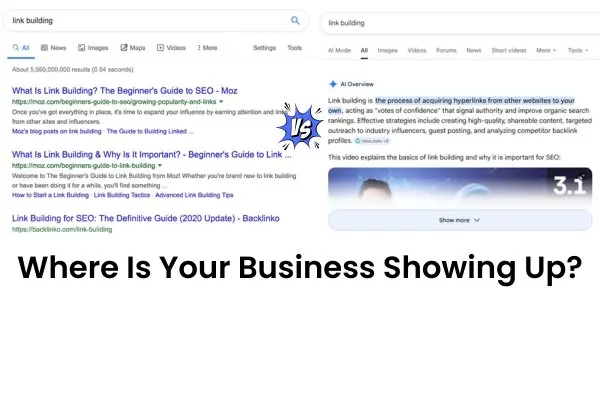
AI search is not a future concern. Google AI Overviews are already appearing in South African search results. ChatGPT’s web browsing capability is available to millions of users. The businesses making these changes now are building a compounding advantage over competitors who are still optimising for 2020.
The changes described above are not complex. On a well-structured WordPress site, an experienced team can implement them in one to two days. The impact on visibility – both in traditional search and AI-generated answers – is measurable within four to eight weeks.
Ready to Audit Your Website's AI Search Readiness?
GKnect Digital offers a full technical SEO audit that includes AI search readiness assessment, schema markup review, and an E-E-A-T gap analysis. If your website is not showing up where your customers are searching in 2026, we can help fix that.
Request your SEO audit → gknectdigital.co.za/search-visibility-seo
FAQ Section
Q1: What is AI search optimisation, South Africa?
A: It is the process of structuring a website so AI models (like Google AI Overviews, ChatGPT, and Perplexity) can extract, understand, and cite its content directly to users.
Q2: Why is my website invisible to AI search engines?
A: Sites fail AI search checks due to missing structured data, core text hidden inside images, thin or keyword-stuffed content, lack of verifiable author expertise, and not using a direct question-and-answer format.
Q3: How do I make my website AI search-ready in 2026?
A: Apply these five essential fixes:
Implement JSON-LD schema markup.
Rewrite image-based hero sections into plain HTML text.
Add dedicated FAQ blocks to service pages.
Create identifiable author profiles with credentials.
Write content that directly answers specific user questions in the opening paragraphs.
Q4: Which schema markup is necessary for AI search optimisation South Africa?
A: The required schema formats include:
LocalBusiness: For home and contact pages.
Service: For specific offering pages.
FAQPage: For pages containing questions and answers.
Article: For all blog posts and news updates.
Q5: Why are author profiles important for AI search inclusion?
A: AI models rely heavily on Google’s E-E-A-T (Experience, Expertise, Authoritativeness, Trustworthiness) guidelines. Verifiable author credentials and biographies provide the trust signals an AI needs to confidently cite your content.
Q6: How long does it take to see results from AI SEO updates?
A: Measurable improvements in traditional visibility and AI-generated citations typically appear within four to eight weeks after implementation.