Most South African business owners we speak to have tried Google Ads at least once, and about 80% stopped because “it didn’t work”. When we look inside those accounts, the problem is almost never Google Ads. The problem is that nobody explained the rules of the game before the money started moving.
This guide is that explanation. By the end you will know how the auction works, what a realistic cost-per-click looks like in your industry in South Africa, what budget it takes to get out of the noise, and the six structural mistakes that cause most SA accounts to bleed money.
Short version for busy owners: Google Ads is profitable for SA businesses when conversion tracking is correct, daily budgets clear the minimum viable threshold for your industry, and the account structure separates intent. Get those three right and you already beat most SA advertisers.
How the Google Ads Auction Actually Works
Every time someone in South Africa types a query into Google, an auction runs in roughly 200 milliseconds. Your ad is not competing on bid alone. Google ranks ads using Ad Rank, calculated from your bid, your Quality Score, the expected impact of your ad assets, and the context of the search.
What that means in practice:
- A competitor bidding R10 with a Quality Score of 9 will beat you bidding R30 with a Quality Score of 3.
- Two identical-looking accounts can carry very different costs because Quality Score compounds over time.
- Context includes device, location within South Africa, time of day, and prior behaviour, which is why broad campaigns without segmentation tend to underperform.
This is the part most SA advertisers miss: you are not paying for clicks, you are paying for the gap between your Ad Rank and the next advertiser’s. Improve relevance and you pay less for the same position.
Realistic Google Ads Costs in South Africa (2026)

There is no single “cost of Google Ads in SA” because costs are auction-driven by industry, intent, and location. These are the average ranges we see across managed accounts in 2026:
| Industry | Avg. CPC (ZAR) | Avg. CPA Range | Monthly Budget Floor |
|---|---|---|---|
| Legal services | R45 – R120 | R900 – R2,400 | R15,000 |
| Financial services (FAIS-regulated) | R30 – R85 | R600 – R1,800 | R12,000 |
| Home services (plumbing, electrical) | R12 – R40 | R250 – R600 | R6,000 |
| E-commerce (general retail) | R4 – R15 | R150 – R450 | R8,000 |
| B2B SaaS | R25 – R70 | R1,200 – R4,000 | R20,000 |
| Healthcare / medical | R20 – R60 | R450 – R1,500 | R10,000 |
| Tourism & hospitality | R6 – R22 | R200 – R600 | R7,000 |
| Mining & industrial supply | R18 – R55 | R1,000 – R3,500 | R12,000 |
Why the budget floor matters. Google’s Smart Bidding needs roughly 30 to 50 conversions per campaign per month to optimise well. Below that, you pay full price for clicks while the algorithm guesses. The floors above are the minimum spend that buys you out of the learning trap in each industry.
The Three Campaign Types Every SA Business Should Understand
Google Ads in 2026 is not one product. It is a family of campaign types, each with a different job, and mixing them up is the single biggest cause of wasted spend.
Search Campaigns (Intent Capture)
This is the original Google Ads: text ads on the search results page. Use Search when the person has already decided what they want and is typing it, like “plumber Bryanston” or “Meta Ads agency Johannesburg”. Highest intent, highest CPCs, predictable.
Performance Max (Discovery + Conversion)
Performance Max runs across Search, Shopping, YouTube, Discover, Gmail, and the Display Network from one campaign. You feed it creative and conversion data, and it decides where to show ads. Useful for e-commerce and lead generation once you have conversion data flowing, and risky before you do. We go deeper in our Performance Max guide for SA SMEs.
Demand Gen (Awareness with Conversion Signals)
Demand Gen, formerly Discovery, runs on YouTube Shorts, the Discover feed, and Gmail. Visual and awareness-oriented, but optimised toward a conversion event. Use it when your category has low search volume but real latent demand, such as a new SaaS product or a lifestyle brand.
Rule of thumb: start with Search for the bottom of the funnel. Add PMax once you have at least 30 conversions a month in Search. Add Demand Gen last, once you know your CPA and want to fill the top of the funnel.
Conversion Tracking: The Thing Almost Everyone Gets Wrong
If you take one thing from this guide, take this: Google Ads is only as smart as the conversion data you feed it. An account with bad tracking will burn money no matter how good the strategist is, because the bidding algorithm is optimising toward the wrong signal.
The 2026 SA baseline for conversion tracking looks like this:
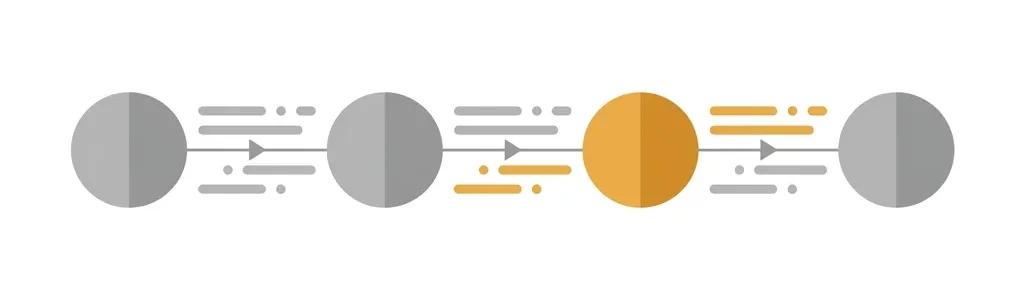
- GA4 installed and configured with proper events (
generate_lead,purchase,contact,quote_request). - Google Ads conversion actions imported from GA4, with a primary action carrying an appropriate conversion value.
- Enhanced Conversions enabled. Hashed email and phone go server-side and recover 15 to 30% of conversions lost to iOS and Safari tracking blocks.
- Offline conversion import for any business with a sales cycle longer than 24 hours, sending actual closed-won revenue back to Google so it bids on quality, not form-fills.
- Call tracking through CallRail, CTM, or Google’s forwarding numbers for any business where phone calls are the primary lead.
Most SA accounts we audit have items 1 and 2 partly configured and almost none have 3, 4, and 5. Closing that gap is usually worth more than any bid change. We cover this further in Where Are Your Leads Really Coming From? Marketing Attribution for SA SMEs.
Account Structure: SKAGs Are Dead, Themes Are Back
For a decade, SA agencies were taught to build Single Keyword Ad Groups (SKAGs). In 2026, with broad match and Smart Bidding doing most of the matching, that structure actively hurts performance because it fragments conversion data across too many ad groups.
The structure that works for SA accounts now:
- One campaign per intent type (brand, competitor, generic high-intent, generic mid-intent, retargeting).
- One ad group per theme, with 10 to 20 related keywords on broad match plus negatives.
- Three Responsive Search Ads per ad group, tested against each other.
- Negative keyword lists shared across campaigns so they don’t cannibalise each other.
If your account has 40+ campaigns or 100+ ad groups, you almost certainly need to consolidate. Smart Bidding needs concentrated signal, not diluted signal.
The Six Mistakes That Waste 70% of SA Ad Budgets
After auditing more than 80 SA Google Ads accounts in the past 18 months, the same six issues account for most of the wasted spend.
- Broad match without a Smart Bidding strategy. Broad match on Manual CPC or Maximize Clicks burns budget on irrelevant searches. It only works paired with Maximize Conversions or Target CPA and clean conversion data.
- No negative keyword maintenance. SA accounts collect “free”, “DIY”, “jobs” and “salary” search terms within a week of launch. If nobody reviews the Search Terms report weekly, you are paying for those.
- Tracking the form view, not the form submit. Plenty of SA accounts optimise to a thank-you page view that fires on every load, so the algorithm treats every click as a conversion.
- Geo-targeting “South Africa” instead of the suburbs that matter. A Sandton dental practice does not need clicks from Polokwane. Tighten location to a 25 to 50km radius around the actual service area.
- Ignoring brand search. Competitors will bid on your brand name. Defending your own brand search costs almost nothing in SA and protects your highest-converting traffic.
- No landing page strategy. Sending ad traffic to a homepage instead of a query-matched landing page roughly halves conversion rate. See our CRO playbook for SA websites.

Frequently Asked Questions
How much should a small SA business spend on Google Ads?
The realistic minimum is the budget that produces 30+ conversions a month at your industry’s CPA. For most home services and e-commerce SMEs that is R6,000 to R10,000 a month. Below R5,000 you are usually feeding the algorithm too little data to optimise.
How long until Google Ads work for an SA business?
Search campaigns can produce conversions on day one if intent and landing pages are right. Smart Bidding typically takes two to four weeks to stabilise. A realistic profitability read takes 60 to 90 days of consistent spend.
Should I run Google Ads or SEO first?
If you need leads in the next 90 days, Google Ads. If you need a long-term lower-cost-per-lead channel, SEO. Most SA businesses we work with need both: Google Ads for now, SEO for next year. See SEO in South Africa: How Long Does It Actually Take to Rank in 2026?
Can I manage Google Ads myself?
Yes, if you have four to six hours a week to learn and maintain it and your monthly spend is under roughly R15,000. Above that, the gap between an in-house generalist and an experienced manager usually exceeds the management fee.
What is the difference between Search and Performance Max?
Search shows text ads to people actively typing queries. Performance Max shows multiple ad formats across the whole Google network to people the algorithm predicts will convert. Search is intent capture; PMax is intent generation plus capture. They work best together.
So Where Does That Leave You?
Google Ads in 2026 is neither cheap nor magic. It is a measurement-driven channel that rewards clean tracking, sensible structure, and the patience to let Smart Bidding optimise. Run by the rules above, the median SA SME should expect a 3:1 to 6:1 ROAS within 90 days. Run without them, expect to be back in the 80% who think Google Ads “doesn’t work”.
If you want a second pair of eyes on an existing account, or a strategy before you switch the meter on, talk to us. We run Google Ads as part of our paid advertising service, and we are happy to tell you when the honest answer is “do not start yet”.